Electricity prices on February 10, 2026, are among the highest we have seen in a long time. This is not due to a single decision or an isolated event, but rather to the simultaneous convergence of several unfavorable factors.
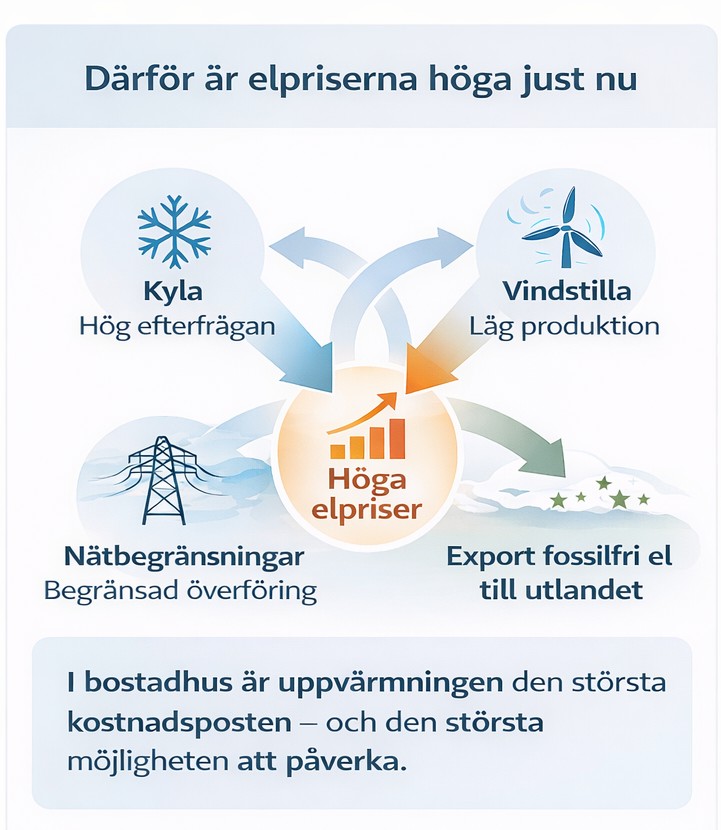
The cold weather has persisted for an extended period, causing electricity consumption to rise sharply as households and buildings require more heat. At the same time, the weather has been unusually calm, meaning that wind power—which normally accounts for a significant portion of production—is generating considerably less than usual. The dry winter has also affected the reservoirs, limiting hydropower’s ability to quickly increase production when demand rises.
Nuclear power is operating near its maximum capacity, but when both wind and hydro power are low at the same time, the margins become narrow. Sweden is also part of the common European electricity market. When demand is high in our neighboring countries, and prices there rise, this also affects Swedish electricity prices. Furthermore, new and improved transmission lines allow electricity to flow to where it commands the highest price, which can drive up prices even in areas that normally have lower rates. At the same time, transmission capacity constraints within Sweden persist, meaning that cheap electricity from the north cannot always fully reach the southern parts of the country.
When high demand, low production, and grid constraints occur at the same time, we see the price spikes we’re experiencing now.
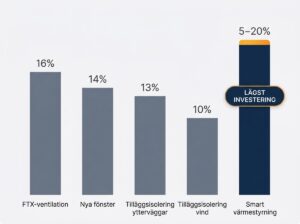
For homeowners, this is a clear reality: heating accounts for the vast majority of energy consumption. It is also where the greatest opportunity lies to influence costs. Through smart, demand-based heating control, you can save energy, smooth out power peaks, adjust heating to account for both the home’s thermal inertia and fluctuations in electricity prices, and thereby reduce the impact when prices spike. When the market fluctuates rapidly, smart and flexible heating becomes a tangible financial advantage—not just a technical detail.